> For the complete documentation index, see [llms.txt](https://relationlabs.gitbook.io/protocol/llms.txt). Markdown versions of documentation pages are available by appending `.md` to page URLs; this page is available as [Markdown](https://relationlabs.gitbook.io/protocol/protocol-zh/architecture.md).
# Relation Protocol的架构
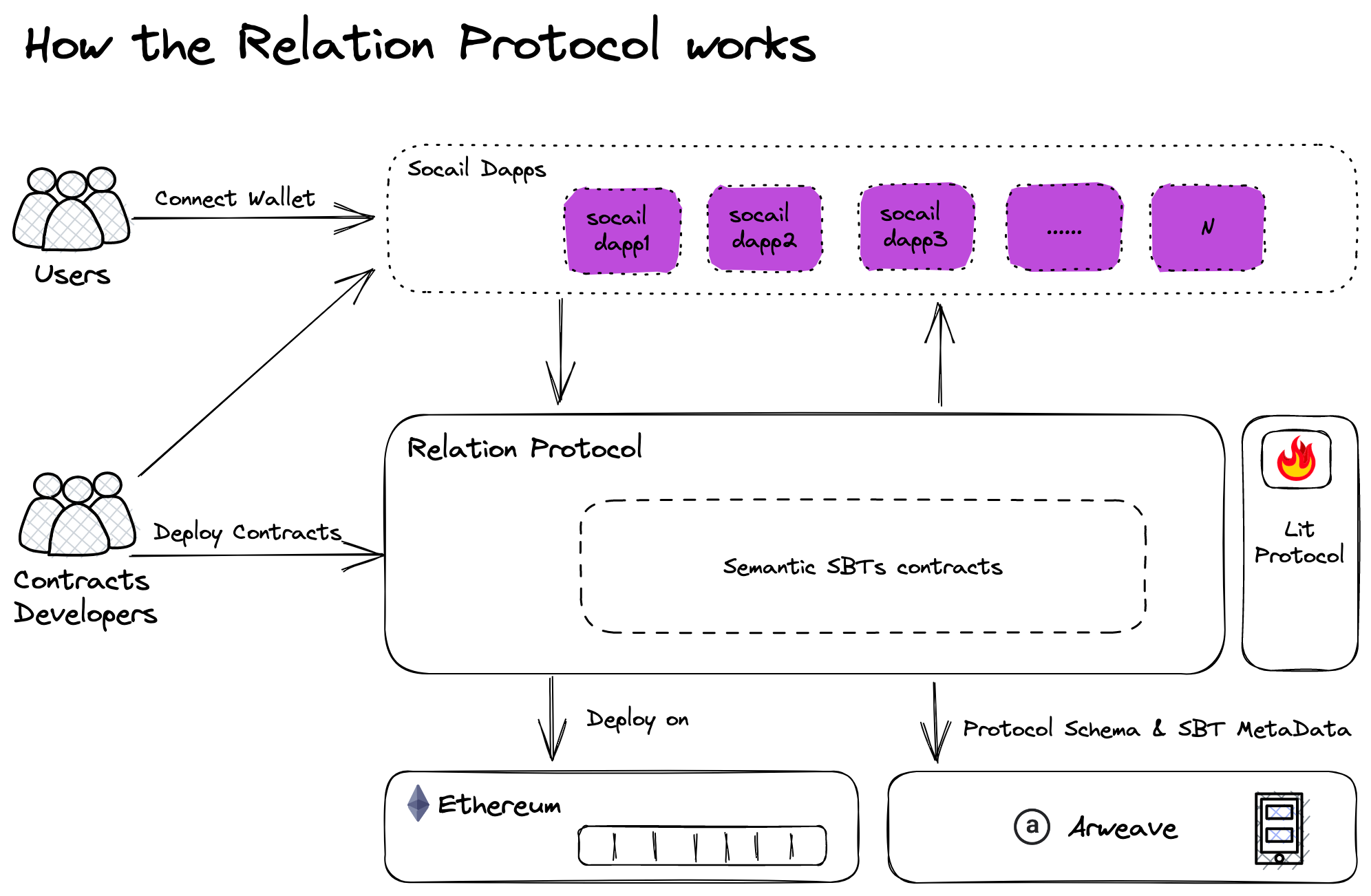
Relation Protocol是一个高度开放的去中心化社交图谱协议,任何开发者都可以基于Semantic SBTs规范开发智能合约、构建自己的Dapp。
用户在使用Dapp的同时会在链上产生大量的行为数据,这些数据都是标准化的、可机器识别的RDF数据。
用户对自己的数据拥有控制权和治理权,并可以控制数据的共享范围。
此时,大家共同构建了一个区块链原生的社交图谱的数据层。
### 协议组成
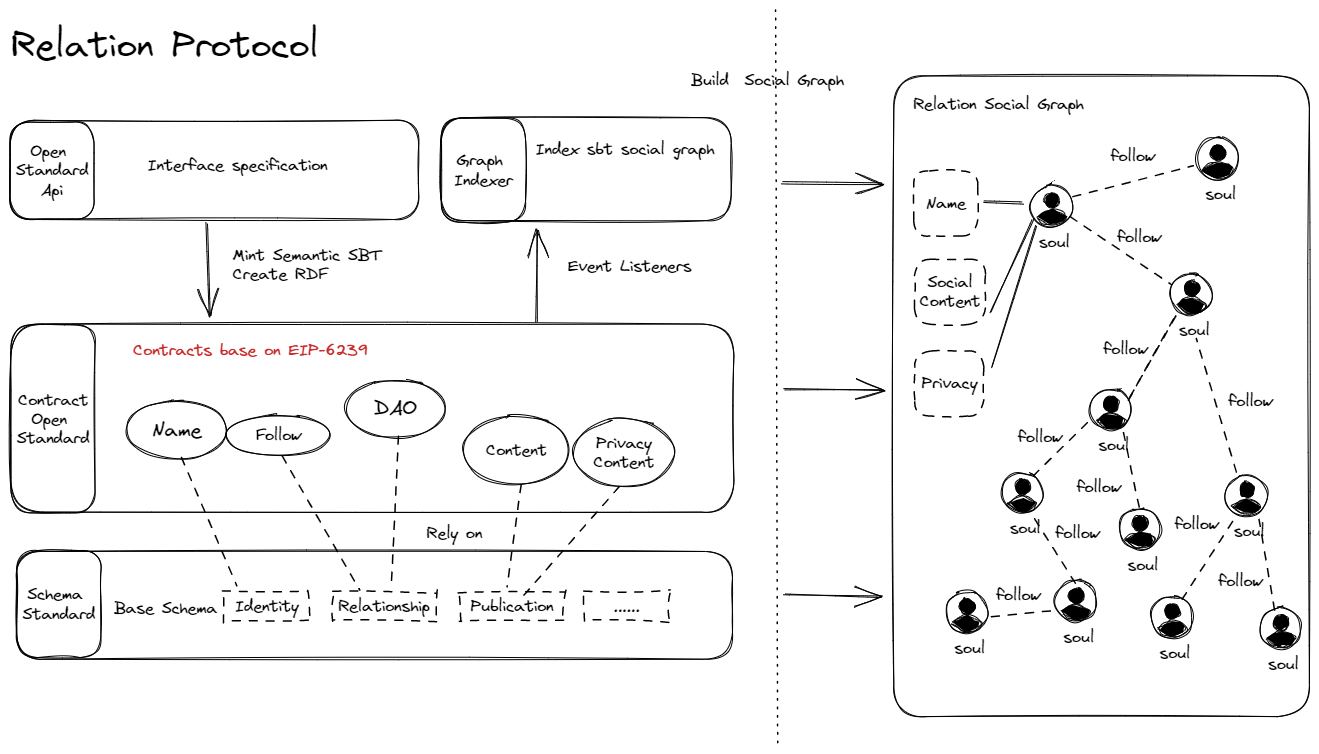
Relation Protocol分为4个部分:
图 3-1 Relation Protocol
**Schema Standard**
Schema Standard 是Relation Protocol中的社交数据存储的Schema标准,它约定了所有基于Relation protocol构建的社交数据格式。
Schema Standard中约定了RelationProtocol的 Base Schema,所有基于Relation Protocol的RDF的构建都需要符合Base Schema的数据定义。
Base Schema由若干个存储在Arweave上的TTL文件组成,它由Relation DAO管理和更新。[Base Schema列表](/protocol/protocol-zh/schema-standard/schema-list.md)
**Contract Open Standard**
Contract Open Standard是Relation Protocol约定的智能合约标准,标准包含一下两部分约定:
* 合约需要符合Open Standard API中所定义的数据格式和接口规范
* 合约构建的RDF数据需要符合Schema Standard
**Open Standard API**
Open Standard API是Relation Protocol的API规范,Open Standard API是Contact Open Standard的基础,开发者通过实现Open Standard API,即可接入Relation Protocol。
**Graph Indexer**
Graph Indexer是Relation Protocol中索引SBT数据的解析器标准,任何人都可以基于Graph Indexer的标准部署数据监听服务。其主要功能是将Ethereum和Arweave中的SBT数据组装,构建出可以在图数据库中被社交应用所使用的Social Graph。
### 协议部署
Relation协议中的合约都部署在以太坊网络或L2中,基于Relation Protocol构建的社交应用可以自己部署特定场景的Semantic SBTs合约,也可以调用设计已经完成部署的合约。
Relation 协议中的Schema由若干个存储在Arweave上的TTL文件组成,它被用于约束Semantic SBT合约的RDF数据规范。
基于隐私的Semantic SBTs有独特的Schema和存储方式,隐私SBT的RDF数据在存储前,需要使用隐私协议(如Lit Protocol)进行加密或解密,用户管理和控制RDF数据的可访问权限。